
Asbestos Removal & Disposal, Melbourne-Wide
Treat any building put up before the 1990s as though asbestos is in it, right up until an assessment says it is not. Finding it early makes it a line item. Finding it with a machine already on site makes it a stoppage, a variation and a very bad week.
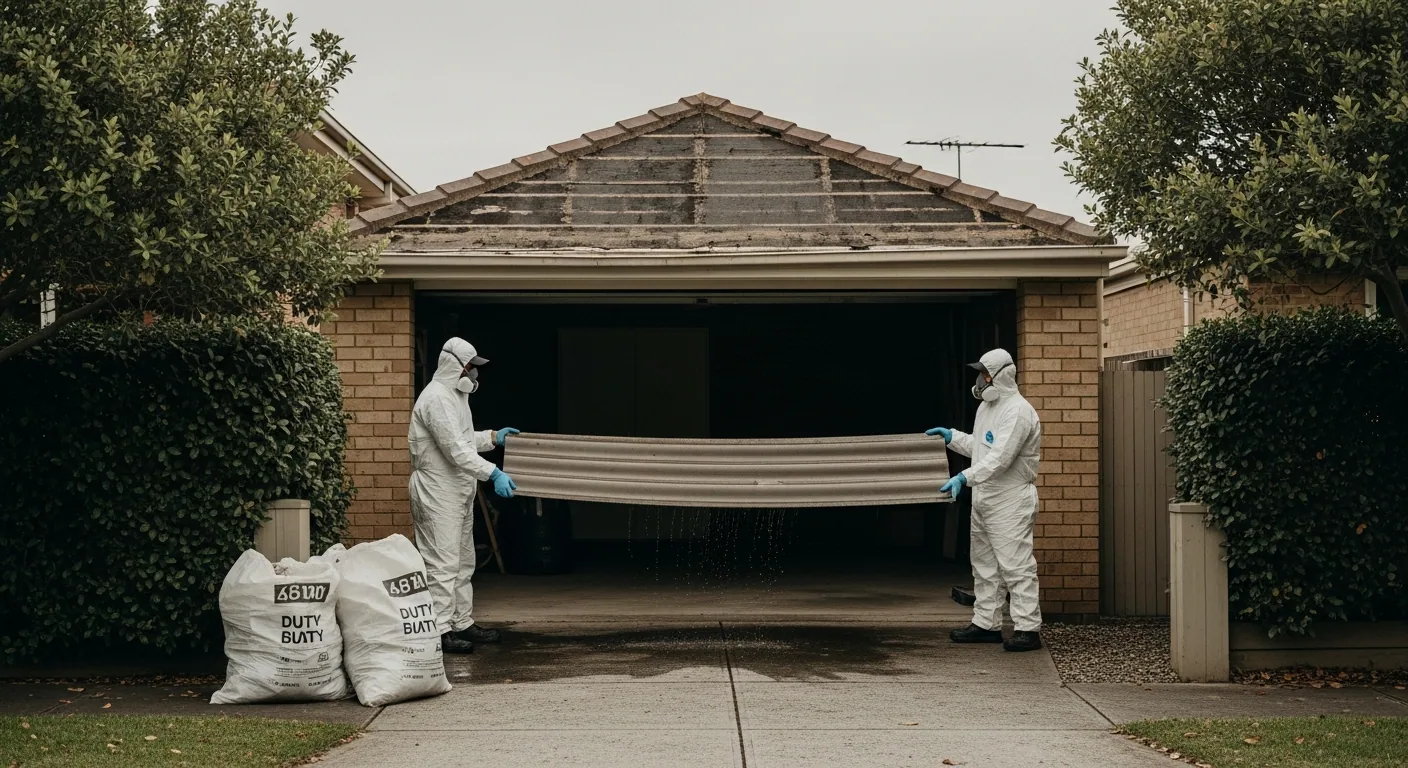
Where it turns up in Melbourne homes
Fibre-cement sheeting is the obvious one — eaves, garage and carport roofing, bathroom and laundry linings, the sheet behind a wood heater. Less obvious: vinyl floor tiles and their black adhesive, the backing on old sheet vinyl, textured ceilings, fence sheets, electrical meter boards, pipe lagging in the subfloor, and packing washers behind wall sheets.
Post-war brick veneer across the northern and western suburbs is full of it. So are the weatherboard houses through the inner north, the 1960s and 70s brick homes across the south-east, and just about every original garage of that era anywhere in the city.
Assessment before a machine turns up
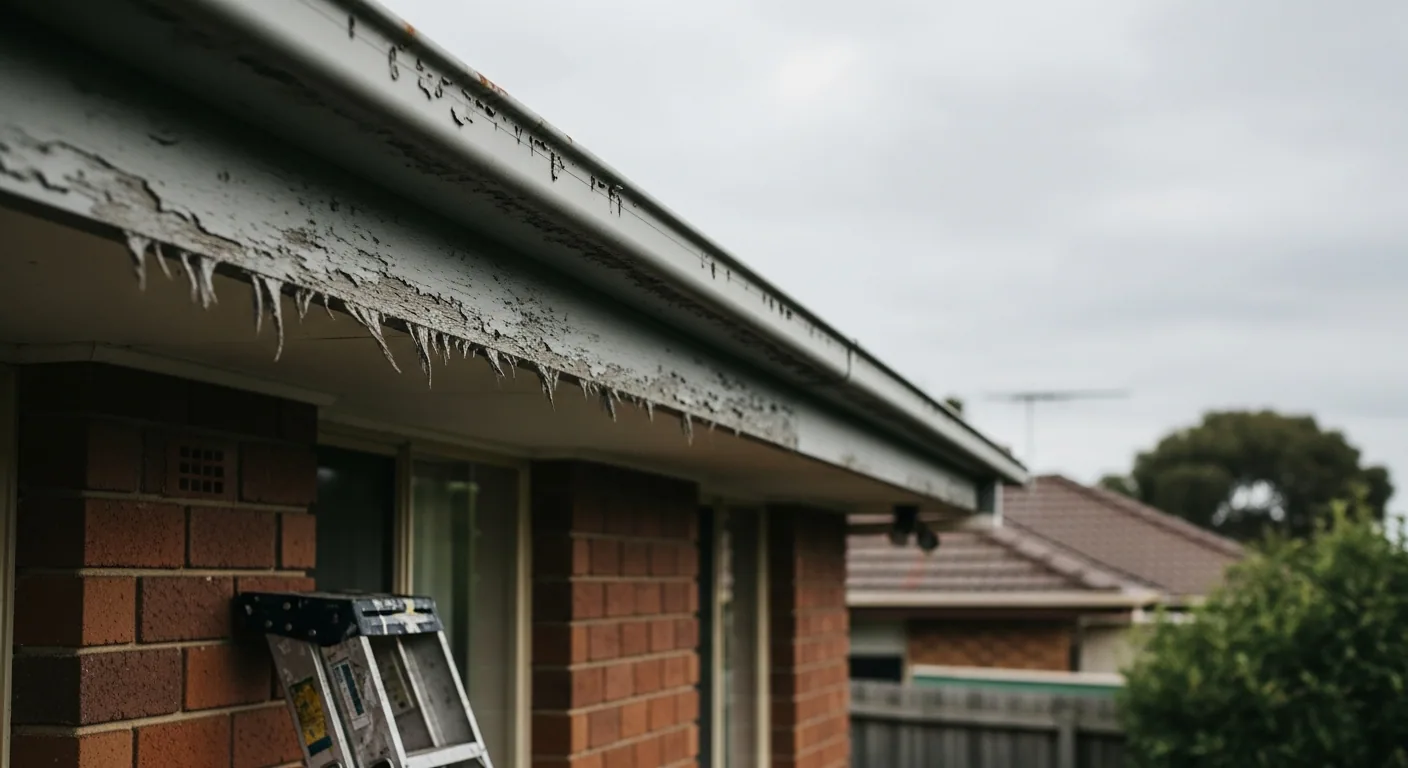
We arrange an assessment as part of the demolition scope, not after it. A licensed assessor identifies what is present and where, and that becomes the removal plan and the disposal budget. It also becomes your evidence, which matters if the property is ever sold, insured or argued about.
Licensed removal, done properly
Bonded (non-friable) material over ten square metres requires a licensed removalist. Friable material — lagging, some textured coatings, damaged and crumbling sheet — requires a Class A licence, WorkSafe notification before the work starts, and independent air monitoring with a clearance certificate at the end.
The removal itself is deliberately unglamorous: wet the material down, take it out whole rather than breaking it, double-wrap and label it, keep the site controlled, decontaminate on the way out. No dry cutting, no power tools on sheet, no "it is only a small bit".
Disposal you can prove
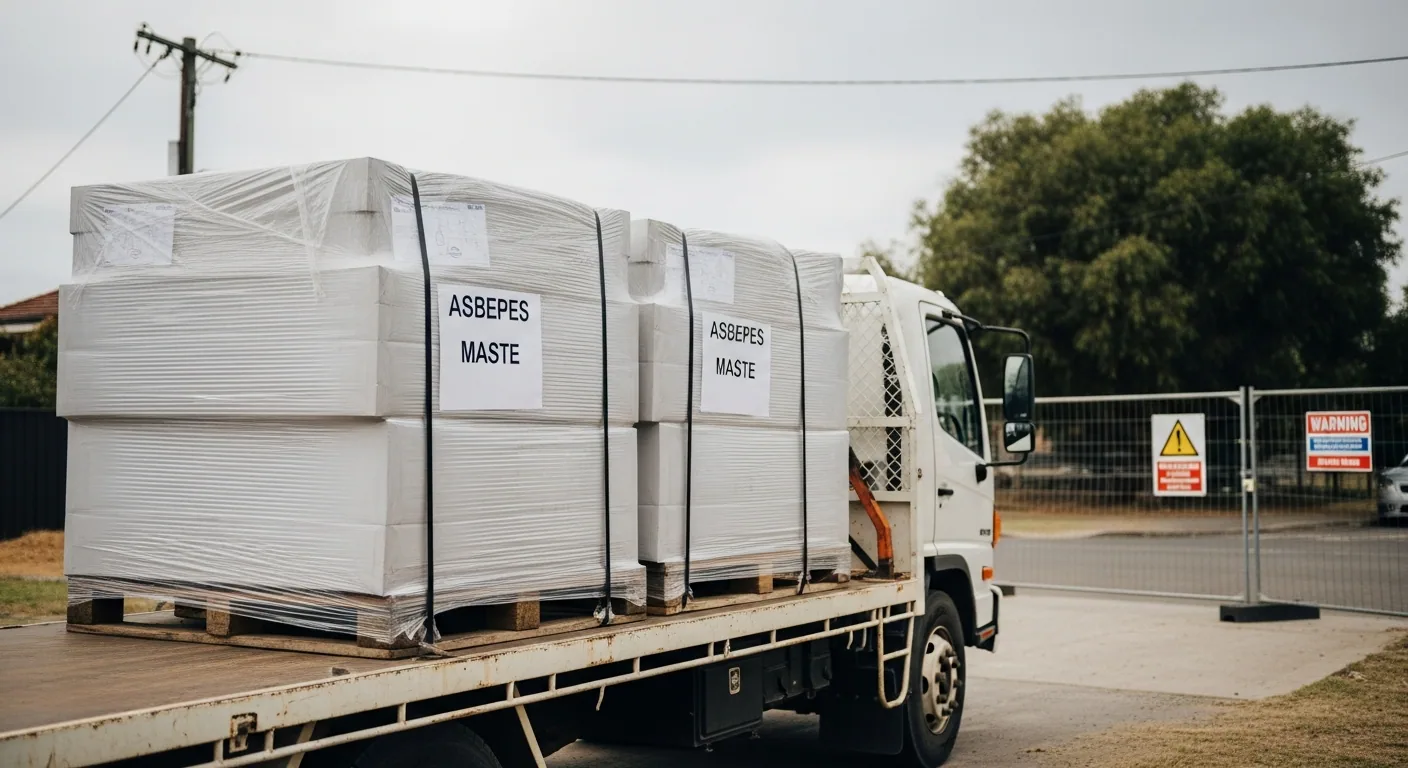
Asbestos waste goes to an EPA-authorised facility on a tracked load, and you get the disposal documentation. That paper trail is the difference between a compliant job and someone's problem later. If a price is well under everyone else's, the disposal is usually where the difference went.
Then the demolition continues
Because we run both, there is no gap between the removal finishing and the machines starting — no waiting for another contractor's crew to become available, no arguing about who is responsible for the sheet nobody quoted. Clearance is issued, the machines move in.
Why choose us for asbestos removal & disposal
- Assessment arranged before machines are booked
- Licensed removal of bonded and friable material
- WorkSafe notification and independent clearance where required
- Double-wrapped, tracked disposal to an EPA-authorised facility
- Disposal documentation handed to you at completion
- No gap between clearance and demolition restarting
Asbestos Removal & Disposal — common questions
Does asbestos have to be removed before demolition?
Yes. It comes out under controlled conditions before the structure is brought down — a machine cannot demolish a building with asbestos still in it. That is why the assessment happens early, not on the morning of day one.
What does asbestos removal add to a demolition price?
It depends entirely on quantity and type. A garage roof and some eaves is a modest line item; friable material through a subfloor, with air monitoring and clearance, is a much bigger one. An assessment turns that from a guess into a number.
What happens if you find more than the assessment showed?
Work stops on that area, we tell you what has been found and what it costs before anything else happens. Hidden material does turn up — behind linings and under floor coverings especially — and the only fair way to handle it is in writing, before the extra work starts.
Get the block cleared properly.
Free on-site quotes · Permits and abolishment handled · Melbourne-wide