
Pool, Garage & Outbuilding Removal in Melbourne
An unused pool is a maintenance bill, a fencing obligation and a chunk of yard you never see. Taking it out is straightforward work — but how the hole gets filled decides whether the ground is stable in five years or quietly sinking.
Full removal versus partial fill
There are two ways to deal with a pool, and they are not equivalent.
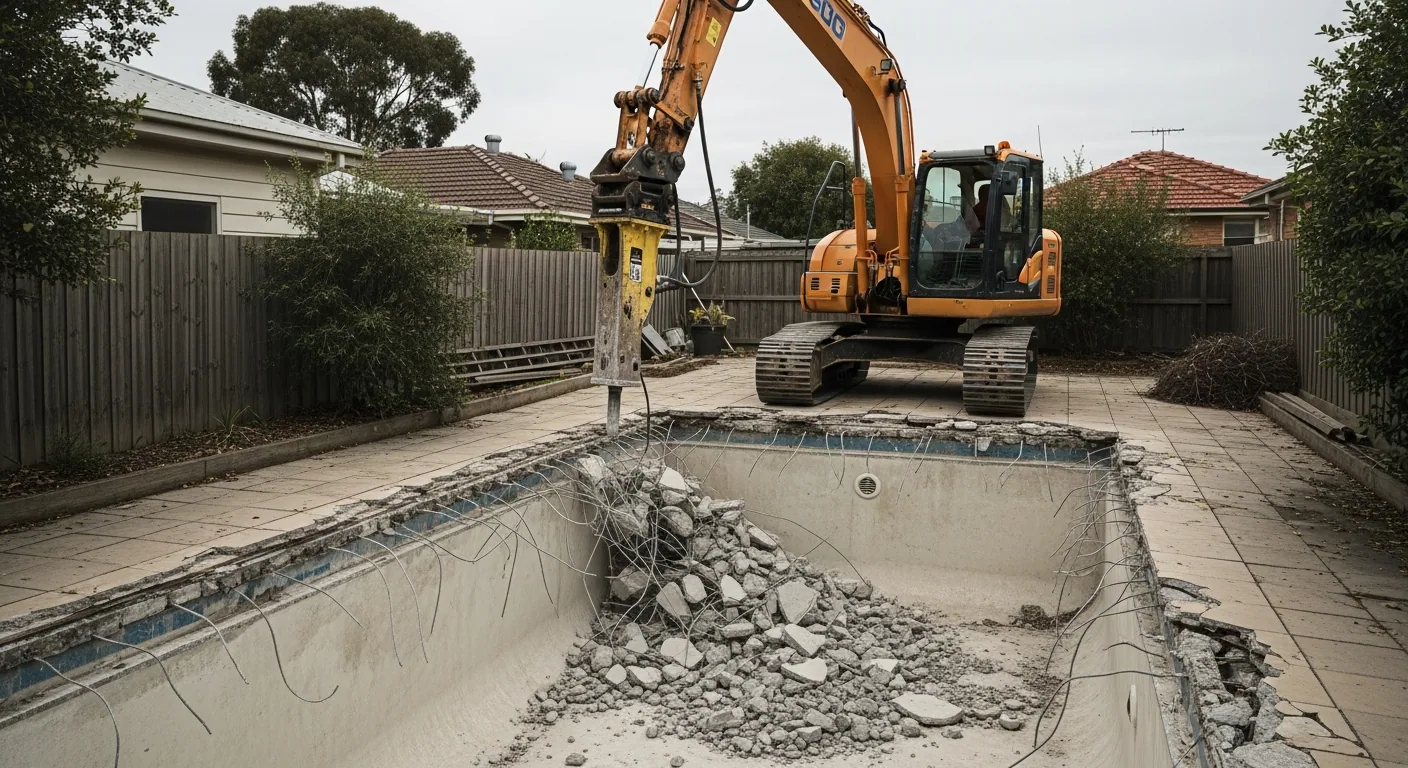
**Full removal** takes the entire shell out — walls, floor, plumbing, skimmer boxes and all — and the void is backfilled in compacted layers. It costs more and it is the only approach that leaves ground you can build over or that a future buyer will not query.
**Partial fill** breaks up the base for drainage, collapses the walls into the hole and backfills over the top. It is cheaper and can be acceptable for lawn or garden, but it is a material fact about the property. Some councils want it documented, most engineers will not let you build over it, and it has to be disclosed on sale. We will quote either and tell you plainly which one suits what you actually plan to do with the yard.
Backfill that actually holds
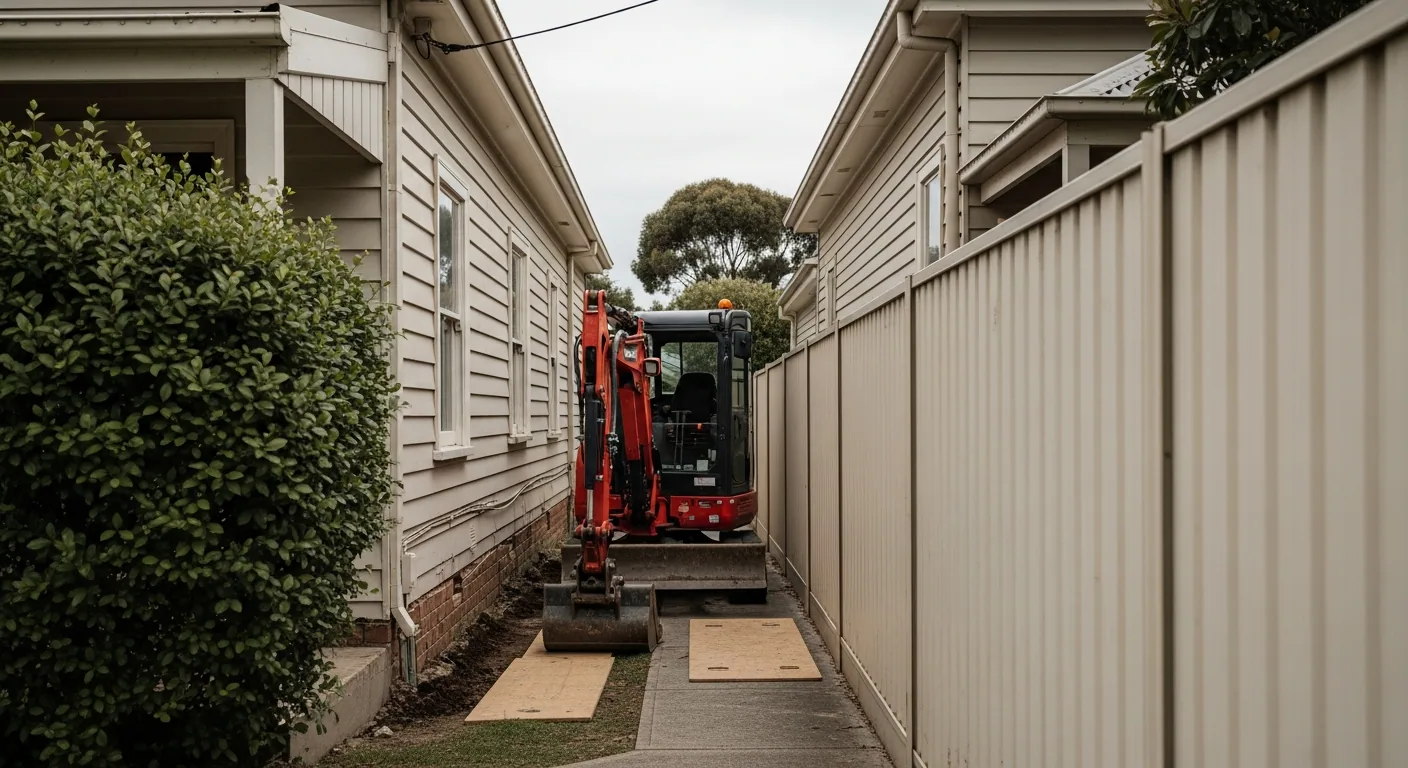
This is where pool removals go wrong. Dropping the rubble in, tipping soil over it and grading it flat looks finished on the day and settles into a dish within two summers. Filling in compacted layers with the right material, testing as it goes, is the difference — and if the area is going under a slab, driveway or extension, engineering-grade fill and compaction testing is not optional.
Access decides the price
On a wide block with a driveway to the back yard, a pool comes out fast. Where the only access is a 900mm side path between a house and a fence, the machine gets smaller, the truck parks on the street, and the spoil is moved in stages. Neither is a problem — but they are very different days, and any quote given without someone looking at your side access is a number pulled out of the air.
Garages, sheds and bungalows
Same crew, same day, usually cheaper than doing it separately later. Brick and colorbond garages, carports, garden sheds, old bungalows and studios, concrete slabs and driveways. Anything of that era with fibre-cement roofing or wall sheeting gets assessed for asbestos first — it is the single most common place we find it.
Finished properly
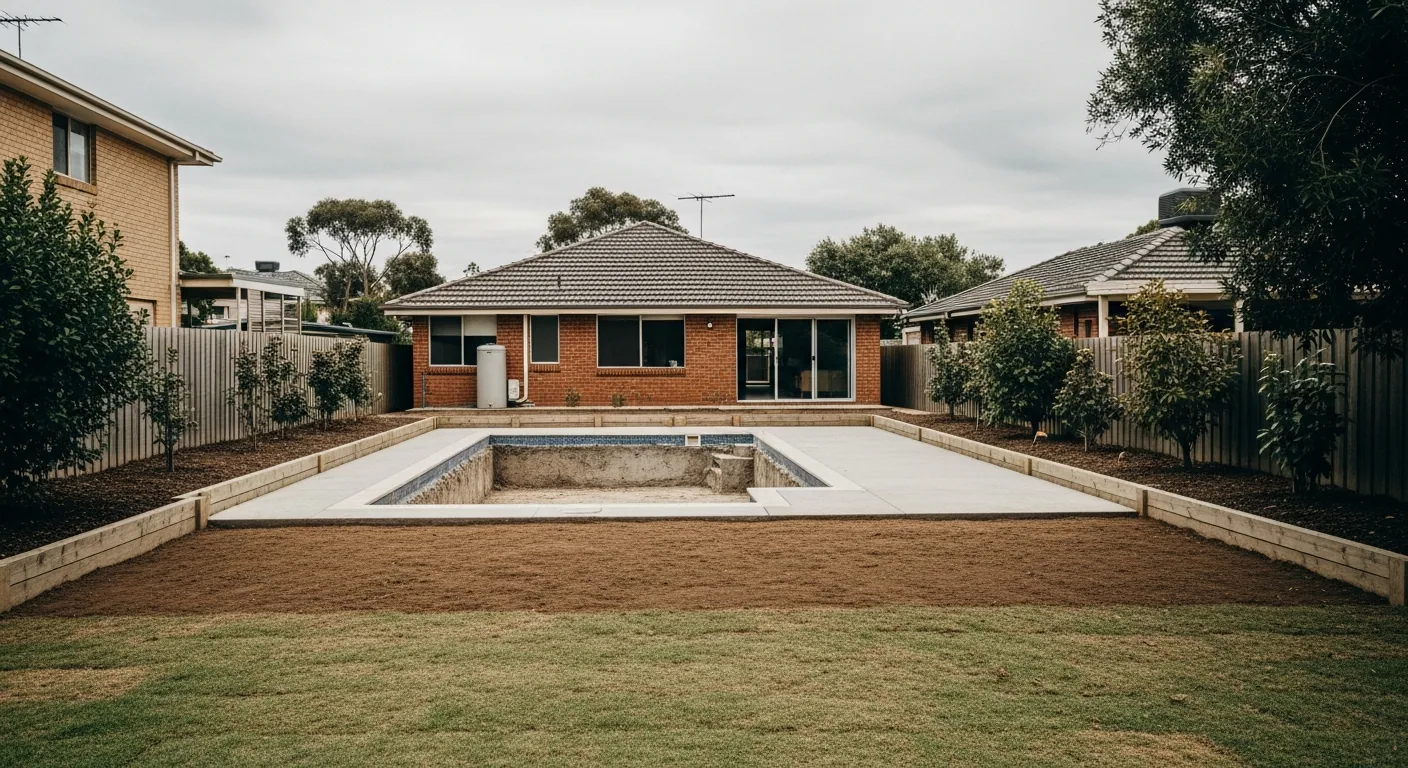
Void filled and compacted, surplus spoil removed, area graded to drain away from the house, and topsoil spread if you are going to turf it. Fence panels and paths taken out to get access are reinstated or, if you would rather, left out because the new landscaping is replacing them anyway.
Why choose us for pool, garage & outbuilding removal
- Concrete, fibreglass and vinyl-liner pools removed in full
- Partial fill option quoted honestly, with its consequences explained
- Backfill placed in compacted layers, engineering-grade where required
- Garages, carports, sheds, bungalows, slabs and driveways
- Asbestos assessed before any old outbuilding comes down
- Area graded to drain, topsoil spread and access reinstated
Pool, Garage & Outbuilding Removal — common questions
Does removing a pool need council approval?
Usually yes — removing a pool generally needs a permit, and your pool safety barrier registration has to be closed out with the council once the pool is gone. We tell you what applies to your address and handle the demolition paperwork.
Can I build over a filled pool?
Only where the shell has been fully removed and the fill is placed and compacted to an engineering specification, with test results to prove it. Over a partial fill, the honest answer is no — you will be paying to dig it out again.
How long does a pool removal take?
Typically two to four days on site for a full removal on reasonable access, longer where everything has to come through a side path or the fill has to be tested in layers.
Get the block cleared properly.
Free on-site quotes · Permits and abolishment handled · Melbourne-wide